Tata Aeris 2026: Should you buy it?

A quick verdict on price, CNG, comfort and the trade-offs to check before you choose the Tata Aeris.
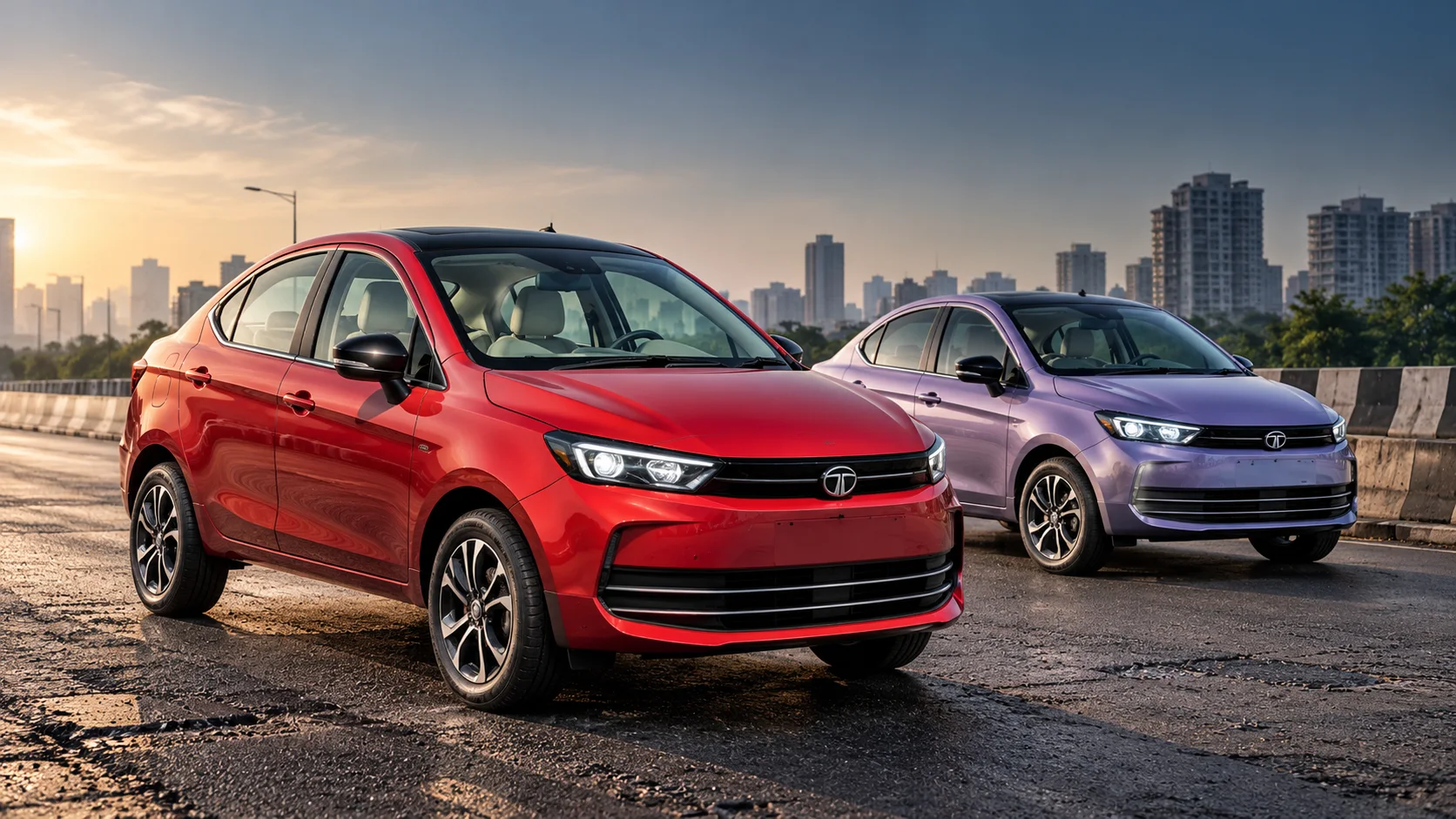
What does the Tata Aeris cost?
The introductory prices were ₹5.29 lakh for petrol and ₹6.29 lakh for iCNG. These are ex-showroom launch prices dated 25 September 2026. Your current on-road quotation will include registration, insurance and applicable charges.
The range lists Smart, Pure, Pure+, Creative and Accomplished trims. The starting price does not include every feature shown on the top model.
Important: Compare the same fuel type, transmission and equipment. Ask for optional accessories and warranty packages to be listed separately.
Tata's launch details provide the dated starting prices. For an exact variant, use the equipment and price guide.
Which features are actually worth paying for?
The strongest reasons to look at the higher trims are seat ventilation, a 360-degree camera and integrated recording. Choose them because they help on your daily route, rather than paying for a longer feature list.
- Ventilated seats: Listed on Accomplished. Try the cooling settings and seat support yourself.
- 360-degree camera: Listed from Creative. Useful for tight parking; check the picture in poor light too.
- Integrated recorder: Listed on Accomplished. Ask how to save, export and manage the footage.
Note: These features are trim-dependent. A model-range advertisement is not the specification of every Aeris.
One recording detail matters: the published demonstration describes tapping “Record Event” to retain approximately two minutes before the tap and three minutes afterwards. It does not establish automatic crash detection. See how the recording is described.
Is it a good choice for bad roads?
Rough-road composure is a reason to shortlist the Aeris, based on the review material provided for this guide. It is a reported impression, not a proven class-leading result or a long-term durability test.
On your test drive, check these three things:
- Low-speed comfort: Does broken tarmac send a sharp impact into the cabin?
- Rear-seat movement: Are your passengers comfortable over normal speed breakers?
- Your exact variant: Tyres, load and the CNG installation can change how the car feels.
Tip: Drive a familiar route with your usual passengers. A comfortable showroom test on smooth roads will not answer a bad-road question.
Manual or AMT: which should you choose?
Manual for direct control; AMT for less clutch work in traffic. The provided review material favours the manual when quicker responses are needed and notes delays from the AMT under demanding acceleration.
- Mostly congested city driving? Try the AMT, including parking, slopes and a gentle start.
- Frequent highway driving? Compare the manual's clutch and gear selection with the AMT's response.
- Buying CNG? Drive the CNG version. A petrol-manual demonstration cannot tell you how a CNG-AMT will feel.
Anyone who will share the car should try the chosen transmission before you book.
What mileage can you expect?
There is no verified mileage result established in this guide. The supplied 13 km/l city and 17 km/l highway estimates do not identify an exact variant or controlled test method. They should not decide your purchase.
Important: Compare petrol in km/l and CNG in km/kg. Do not compare a casual estimate for one car with a certified figure for another and treat it as a measured difference.
For a useful running-cost comparison:
- Petrol cost/km = local petrol price per litre ÷ realistic km/l.
- CNG cost/km = local CNG price per kilogram ÷ realistic km/kg.
- Monthly fuel cost = cost/km × your monthly driving distance.
Use dated local fuel prices. Add the purchase-price difference, servicing, insurance, finance costs and access to CNG stations before deciding which version costs less to own.
What should families check?
Bring your passengers and the bags you normally use. The twin-cylinder CNG layout aims to retain usable luggage space, but the cylinders still change the boot.
Important: 419 litres is the claimed petrol boot figure. Do not treat it as the CNG boot capacity.
Check rear knee room, headroom, the middle seat, headrest position and rear AC airflow. The supplied material raises an airflow concern on the reviewed car; that is a reason to check your demonstration vehicle, not evidence that every car has the same issue.
For the driver, spend time adjusting the seat and steering. Seat firmness, visibility and support matter more than a quick showroom impression.
Petrol and CNG: the essential specifications
| Specification | Petrol | iCNG |
|---|---|---|
| Engine | 1.2-litre, 3-cylinder | 1.2-litre, 3-cylinder |
| Quoted power | 86 PS | 75.5 PS |
| Quoted torque | 113 Nm | 96.5 Nm |
| Gearboxes | 5-speed manual / AMT | 5-speed manual / AMT |
| Boot | Claimed 419 litres | Different capacity; confirm for your variant |
These are published specifications, not measured outputs. PS is metric horsepower. CNG has lower quoted output, so test it with passengers and air conditioning running. Check the detailed specification.
Aeris, Dzire, Amaze or Aura: which belongs on your shortlist?
Start with your priority, then compare equivalent variants. This guide does not establish an overall winner from a simultaneous four-car test.
- Choose an Aeris test drive for: CNG packaging, selected comfort features and the reported poor-road behaviour. Check the AMT response and rear-seat fit.
- Compare the Dzire for: Its documented efficiency proposition and the current cost of an equivalent variant. Explore the Dzire.
- Compare the Amaze for: Petrol manual/CVT options and your preferred automatic driving feel. See Amaze specifications.
- Compare the Aura for: Its petrol/CNG range, available transmission combinations and local deal. See Aura equipment.
Tip: Your final three checks: Drive the exact powertrain, bring your usual passengers and luggage, and compare written on-road quotations.
Quick questions, clear answers
Is the Tata Aeris worth buying?
It is worth shortlisting if CNG practicality, selected comfort features and the reported ride behaviour match your needs. Confirm the seat fit, AMT response and final price before choosing it over a rival.
Does it replace the Tigor?
Yes. The Aeris updates Tata's private-buyer compact-sedan offering and replaces the Tigor nameplate.
Can I get CNG with AMT?
The range includes both iCNG and AMT. Confirm that your preferred trim, fuel and gearbox are available together.
Do all variants have ventilated seats and recording?
No. The published equipment list places ventilated seats and the recorder on Accomplished. Check your exact car's specification before booking.
Is the ₹5.29 lakh figure an on-road price?
No. It was the introductory petrol ex-showroom price announced on 25 September 2026. Ask for a current local quotation.
About this guide: Aniket Thakur's buying analysis is based on supplied review material and linked manufacturer information. It is not an independent road test or an ownership report. Prices are dated launch references; specifications and availability can change. Checked on 21 October 2026.
Sources & References
- Tata group — Tata Aeris launch information
- Tata — official Aeris model information
- SP Tata — model specifications and dated introductory prices
- ZigWheels — Tata Aeris petrol and CNG review (camera recording operation)
- Maruti Suzuki — official Dzire information
- Honda Cars India — Amaze specifications
- Hyundai India — Aura features and powertrain availability